
Basement Moisture Mitigation vs. Waterproofing: Which Do Twin Cities Homeowners Need Before New Flooring?
Published November 24, 2026
A damp basement does not always mean the same thing, and treating every damp basement the same way can lead to the wrong fix. Waterproofing and moisture mitigation address different problems: waterproofing and drainage work help prevent liquid water from entering, while moisture mitigation systems control vapor transmission through a concrete slab that could affect new flooring. Some Twin Cities basements need one, some need both, and new flooring should not go down until the actual source of moisture has been identified and addressed.
Waterproofing and Moisture Mitigation Are Not the Same Repair
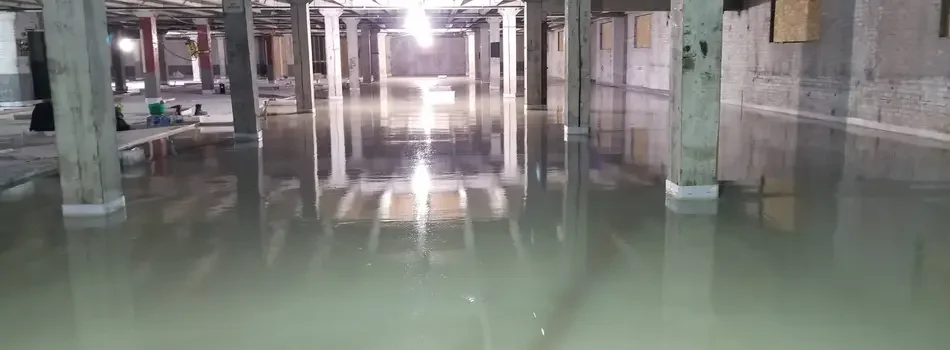
Basement waterproofing addresses liquid water entering through cracks, joints, or below-grade walls, often involving drainage, grading, or groundwater-related conditions. Moisture mitigation deals with vapor emission: water vapor that migrates through a concrete slab even when there is no visible leak.
A basement can have excellent drainage and still produce enough vapor to damage new flooring, and a basement with an active water leak will not be fixed by a flooring vapor barrier alone. Before choosing a flooring plan, it helps to know which of these problems is actually present.
Why a Dry-Looking Slab Can Still Fail New Flooring
A common mistake homeowners make is judging a slab by how it looks or feels. A bare basement slab can appear completely dry because moisture moving through the concrete may evaporate into the open room.
Once that slab is covered with flooring and adhesive that restrict vapor movement, moisture can accumulate beneath the flooring or within the installation materials. A floor that looked fine for years as an exposed slab can develop problems after installation if its moisture condition was not properly evaluated.
What Moisture Testing Actually Tells You
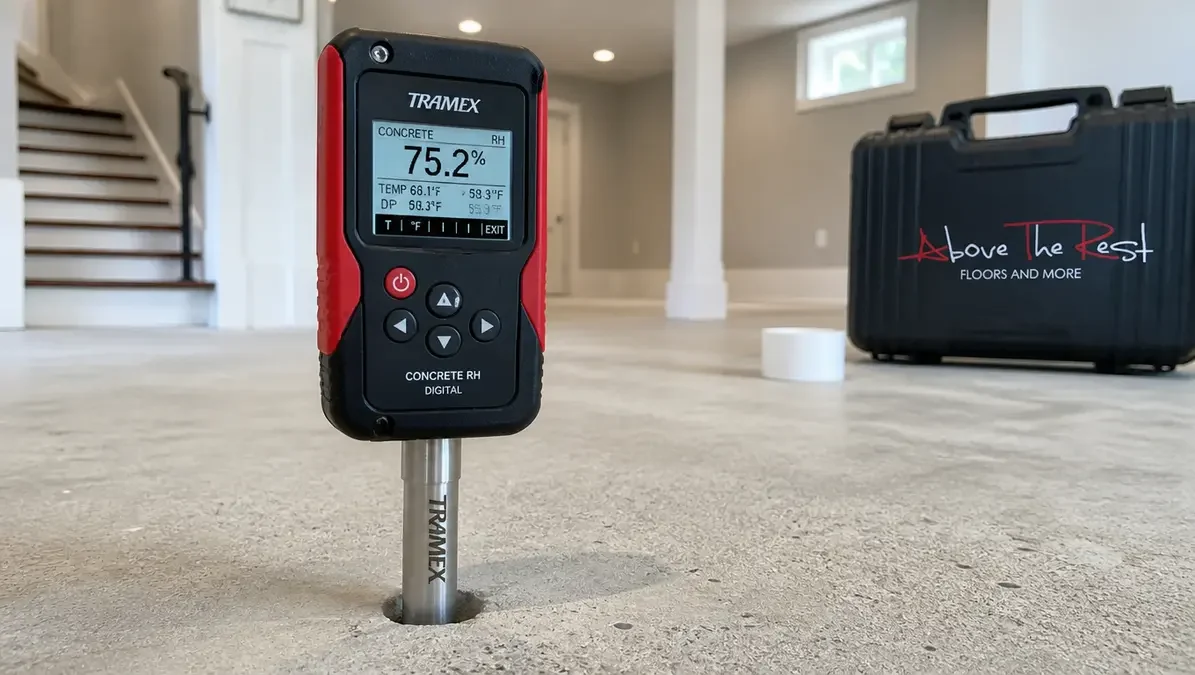
Homeowners sometimes assume all moisture tests measure the same thing, but two of the most common industry test methods look at different conditions:
- ASTM F2170: Measures relative humidity inside the concrete itself using in-situ probes placed at a specified depth.
- ASTM F1869: Measures the rate of moisture vapor emission from a bare concrete surface using a calcium chloride test.
These results are not interchangeable. ASTM F2170 reports internal relative humidity as a percentage, while ASTM F1869 reports moisture vapor emission as pounds per 1,000 square feet over 24 hours.
ASTM F1869 also has application limits. It should not be used to evaluate moisture emissions through existing coatings, patching materials, or leveling compounds.
The more useful question is not simply whether a test passed, but whether the result meets the requirements of the specific flooring and adhesive system being installed.
Flooring and adhesive manufacturers set acceptable moisture limits and installation requirements for their products, which is why there is no single pass-or-fail number that applies to every basement floor.
The right benchmark depends on whether the plan is hardwood, tile, carpet, or another flooring option, along with the adhesive or installation system being specified.
It is also worth remembering that a moisture test is a snapshot. A result reflects the tested location and the conditions at the time of testing, not a permanent guarantee against future moisture problems, especially if conditions around the home change later.
Ruling Out the Simple Causes Before Assuming the Worst
Not every damp basement needs an extensive repair. Before assuming a full below-grade drainage system is required, it is worth checking the basics first:
- Gutters and downspouts directing water away from the foundation
- Grading that slopes away from the home rather than toward it
- Seasonal condensation, which shows up when warm, humid summer air meets cool basement surfaces and is a different issue than groundwater intrusion
The Environmental Protection Agency recommends checking for basement leaks and correcting moisture problems before remodeling, noting that improvements may be as simple as redirecting downspout runoff or correcting grading.
Correcting surface water management can sometimes resolve what looks like a bigger intrusion problem.
On the other hand, running a dehumidifier can make a basement feel more comfortable and reduce indoor humidity, but it does not fix an actual water entry point.
A comfortable, less humid room is not proof that the underlying moisture source has been corrected, which matters when new flooring is about to be installed over that same slab.
Moisture Control and Floor Flatness Are Two Separate Issues
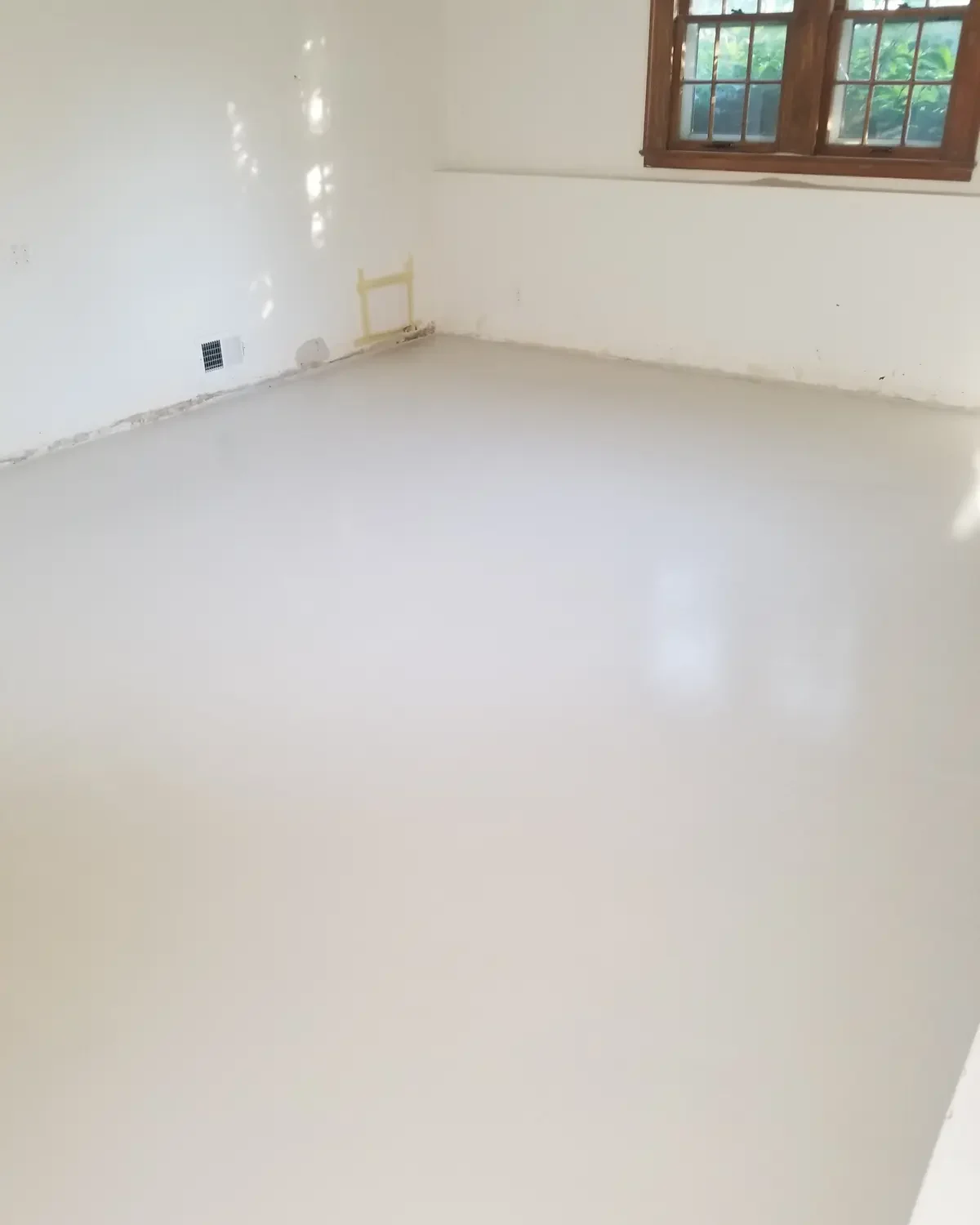
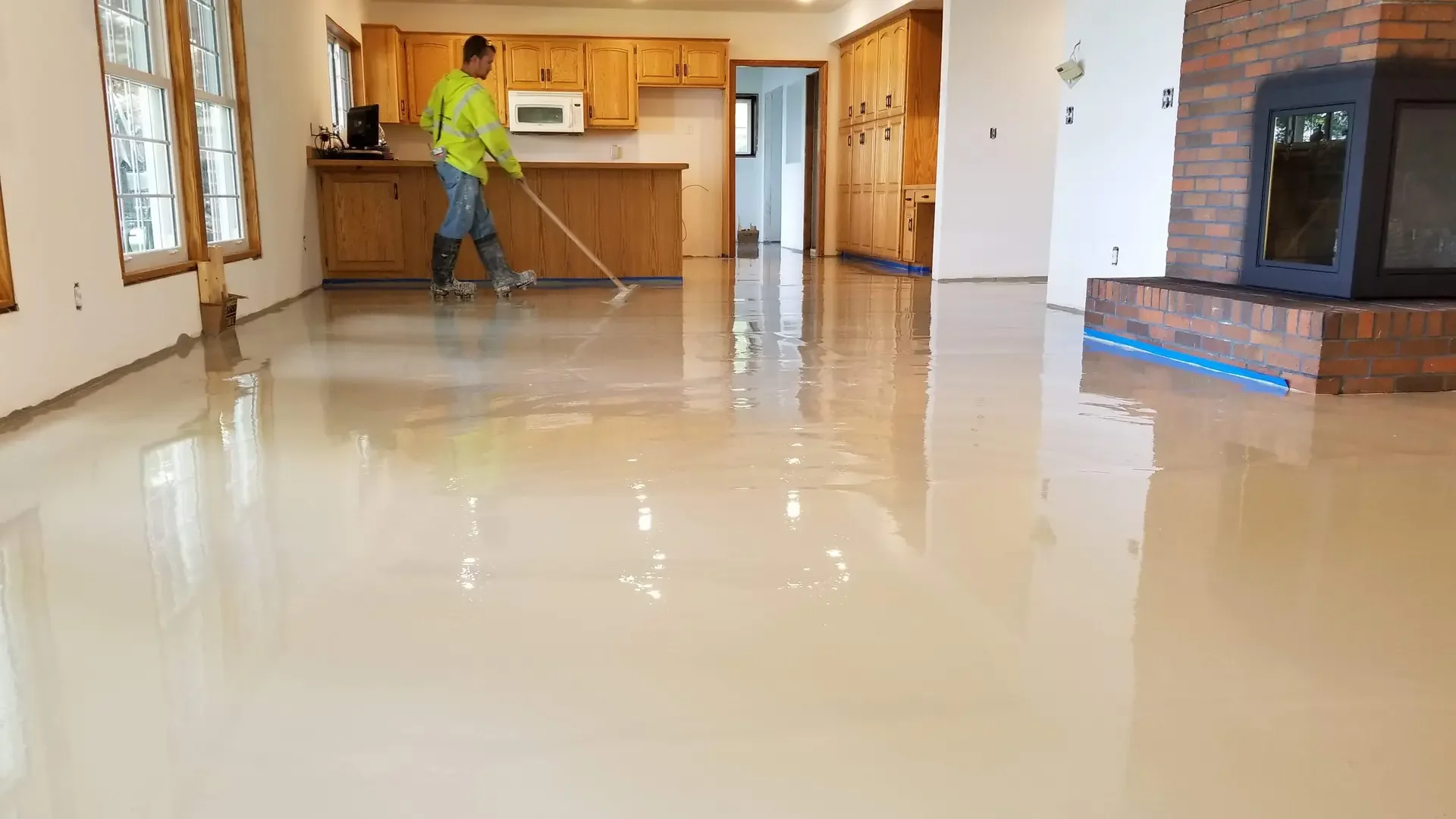
Even once moisture is addressed, a basement slab may still need leveling before new flooring can go down.
Moisture-control products and leveling or underlayment products serve different purposes: one manages vapor, while the other corrects an uneven or rough surface.
Flattening a floor does not treat moisture, and treating moisture does not flatten a floor.
Above The Rest Floors & More, operating as ATR Concrete Technologies, offers residential concrete restoration and surface preparation services, including moisture testing, moisture mitigation, vapor barriers, and concrete floor leveling.
These services help prepare basement slabs for the flooring system selected by the homeowner.
For residential projects involving carpet, hardwood, tile, or luxury vinyl flooring, Above The Rest prepares the concrete and coordinates the handoff to the homeowner's flooring installer. The company does not install those residential finished-floor products itself.
That distinction is important when planning the project schedule, since moisture correction, concrete leveling, and finished-floor installation may involve separate stages.
What This Means for Your Flooring Timeline
For Twin Cities homeowners planning new basement flooring, the practical takeaway is to treat moisture and surface preparation as two separate questions, not one:
- Identify whether the issue is liquid water entry, vapor emission, seasonal condensation, or some combination.
- Correct any active leaks or drainage issues at the source rather than masking them.
- Compare testing results against the specific flooring and adhesive system being considered, not a generic standard.
- Evaluate whether the slab also needs leveling or other surface preparation before installation.
- Coordinate the completed moisture mitigation and concrete preparation work with the contractor installing the final residential flooring.
Working through these steps in order helps avoid installing flooring over a condition that has not actually been resolved.
Ready to Find Out What Your Basement Actually Needs?
If you are planning new flooring for a basement in Minneapolis, Fridley, Roseville, Anoka, or elsewhere in the Twin Cities metro, it is worth understanding the moisture condition of your slab before you buy materials.
Above The Rest Floors & More offers moisture testing, moisture mitigation, vapor barrier systems, and concrete floor leveling to help prepare basements for their next flooring system.
Call (651) 463-1250 to talk through your basement's moisture and concrete conditions, and find out what needs to happen before your next flooring project.

About the author
Nick Winscher
Sales Manager / Senior Project Manager
Nick brings more than 20 years of commercial construction and flooring experience to project planning, underlayments, floor leveling, and delivery.