Epoxy and Industrial Floor Coatings in the Twin Cities
Epoxy flooring is only as good as the substrate underneath it. A coating applied over contaminated concrete, uncured adhesive, or uncontrolled moisture will blister, delaminate, or chalk within months — no matter which resin system was specified. ATR Floors pairs industrial-grade coating systems with the Clean Slate Process to deliver epoxy, polyurethane, polyaspartic, and specialty resinous floors that perform for years.
4 Resin
Families: EP / PU / PA / MMA
5–10 yrs
Design Life Commercial
USDA / ESD
Specialty Systems
Where Industrial Epoxy Wins
Resinous floor coatings are the standard for environments where the floor must resist chemical exposure, heavy abrasion, thermal shock, or microbial contamination. The right system depends on the exposure profile — not the budget.
Epoxy Systems
The workhorse of industrial flooring. Two-component thermosetting resins that cure to a hard, chemically resistant surface. Cure: 12–24 hours to foot traffic, 3–7 days to full chemical cure.
Polyurethane (PU) Topcoats
Topcoats over epoxy base coats for enhanced UV stability, abrasion resistance, and chemical resistance. Prevent the yellowing and chalking that straight epoxy develops under UV exposure.
Polyaspartic Systems
Fast-cure resinous coatings returned to service in 4 to 8 hours. Combine the chemical resistance of epoxy with the UV stability of polyurethane and the speed of MMA.
MMA (Methyl Methacrylate)
The fastest-cure resinous system available. Full chemical cure in 1–2 hours at temperatures as low as -20°F. For cold storage, 24/7 food processing, and emergency floor repairs.
ESD / Static-Dissipative
For electronics manufacturing, clean rooms, server rooms, laboratories. Channels static buildup to ground per ANSI/ESD S20.20 and ASTM F150.
USDA-Approved & Urethane Cement
USDA-approved seamless systems for food-contact areas. Urethane cement for commercial kitchens that resists thermal shock (-40°F to 250°+), grease, and caustic cleaning chemicals.

The Coating Is Only as Good as the Substrate
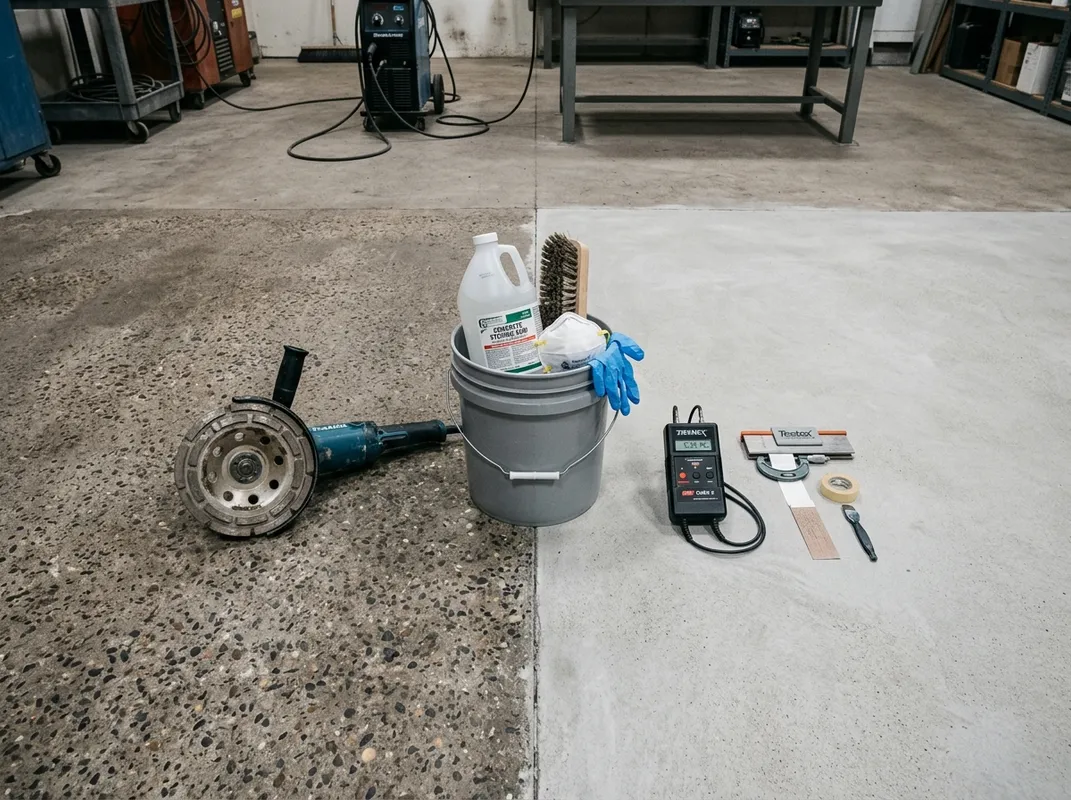
The industry standard for substrate prep is mechanical shot blasting or diamond grinding to achieve a CSP 2 to CSP 4 profile. Both methods generate concrete dust, require silica containment, and trigger OSHA Table 1 compliance. The Clean Slate Process achieves the same CSP profiles using chemical profiling (WashAway Xtreme) instead of mechanical grinding. No dust. No silica containment. Stronger bond. Longer coating life.
Why Choose ATR for Industrial Coatings
Clean Slate Substrate Prep
Chemical profiling extracts contaminants from the pores rather than grinding over them. Cleaner substrate, stronger bond.
System Selection by Exposure
We assess chemical exposure, traffic, temperature, and downtime — and spec the system that matches, not the cheapest one.
2-Year Workmanship Warranty
Written warranty on every installation. Material warranties from coating manufacturers apply separately.
Shutdown-Window Scheduling
After-hours, weekends, and phased zones. MMA and polyaspartic systems for facilities that cannot accept multi-day downtime.
Industries We Serve With Coatings
Frequently Asked Questions
The answer depends on four variables: chemical exposure (what spills on this floor?), traffic type and weight, temperature range, and available downtime for cure. We assess all four during the site walk and recommend the system that matches the exposure profile — not the one that fits the budget. A $4/sq ft epoxy that fails in Year 1 is more expensive than a $7/sq ft urethane cement that lasts 10 years.
Standard epoxy: foot traffic in 24 hours, full chemical cure in 5 to 7 days. Polyaspartic: foot traffic in 4 to 8 hours, full cure in 24 hours. MMA: foot traffic in 1 to 2 hours, full cure in 4 hours. We schedule application around your operational windows and can phase large floors into zones for continuous operation.
Yes, with system selection adjusted for the environment. Low-odor epoxy and polyurethane systems are available for occupied offices, healthcare, and senior living. MMA systems have strong odor during application and require forced ventilation. We match the system to the environment and schedule application during off-hours when occupant exposure is a concern.
Conventional substrate prep (shot blasting, diamond grinding) removes existing material but leaves behind microscopic contaminants — adhesive residue, oil films, grinding slurry — that reduce bond strength. The Clean Slate Process uses chemical dissolution to extract contaminants from the concrete pores. The result is a cleaner substrate and a stronger bond between the primer and concrete. Stronger bond = longer coating life.
Our Clean Slate Process eliminates the primary OSHA concern in coating projects: silica dust from mechanical grinding. No grinding means no respirable crystalline silica, no Table 1 complexity, and no air monitoring during substrate prep. For USDA and FDA-regulated facilities, we install approved seamless resinous systems and provide material compliance documentation for your regulatory file.
The Coating Is Only as Good as the Substrate. We Handle Both.
Include facility type, sq ft, chemical exposure profile, and schedule constraints. We respond within one business day.