Commercial Moisture Mitigation in the Twin Cities
Flooring failures cost more than the floor itself — they cost the schedule, the tenant relationship, and the credibility of every contractor who signed off on the substrate. When adhesive delaminates six months after installation or LVT planks start cupping in a brand-new multifamily build, the root cause is almost always the same: uncontrolled moisture vapor transmission through the slab. ATR Floors tests, diagnoses, and mitigates commercial slab moisture before your finished floor goes down — not after it fails.

ASTM F2170
In-Situ RH Testing
≥10%
RH Reduction (VersaGuard)
4–8 hrs
Cure Before Flooring
How We Mitigate Moisture
Moisture problems in commercial concrete are invisible until they are expensive. A slab that reads 80% RH at the time of pour will still read above manufacturer thresholds 90 days later in many Minnesota conditions. We test, diagnose, and mitigate before the finished floor goes down.
Pre-Installation RH Testing (ASTM F2170)
Drill test holes per ASTM F2170 frequency, install in-situ probes at 40% slab depth, allow 72-hour equilibration, and document in a formal test report suitable for spec files and manufacturer warranties.
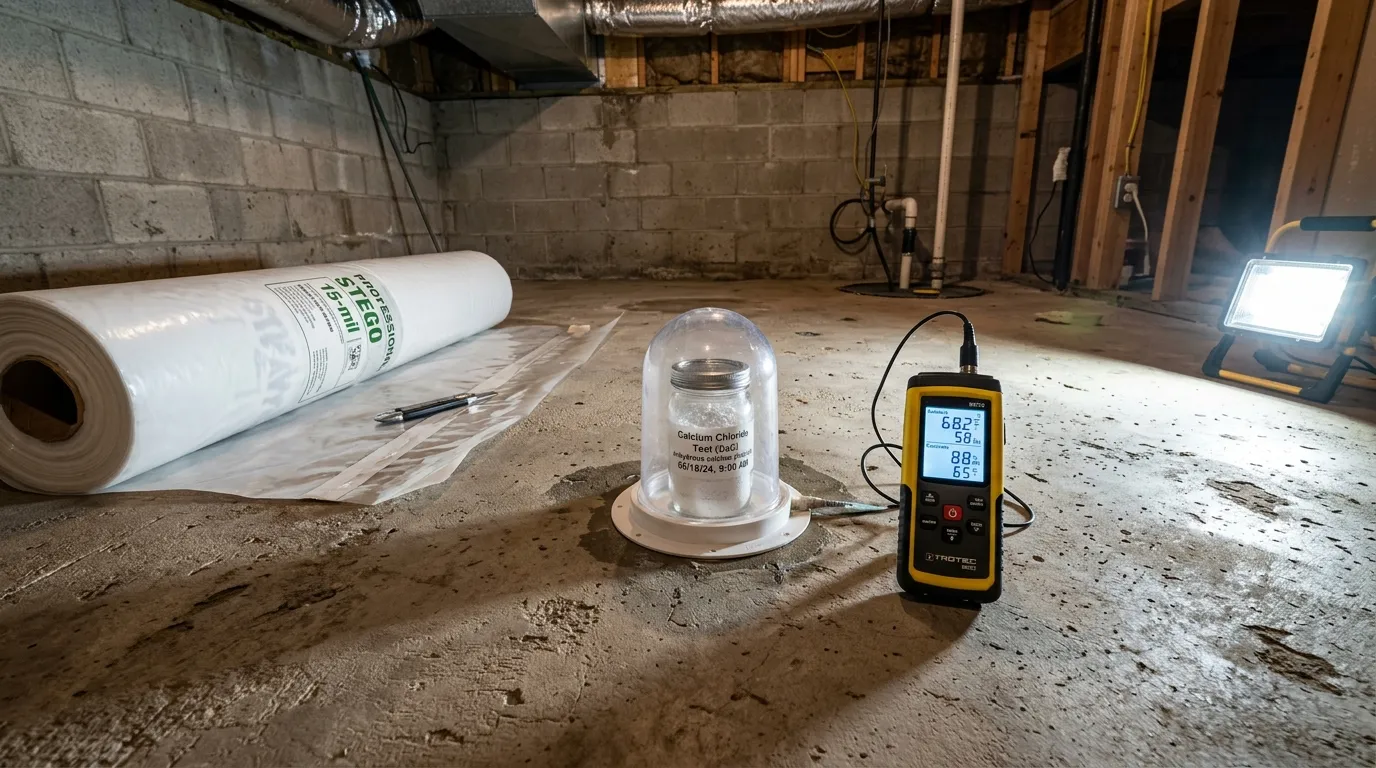
Calcium Chloride Testing (ASTM F1869)
For specs that reference the MVER test, we perform the 60–72-hour dome test per ASTM F1869. We test to whichever standard your spec requires — or both, when belt-and-suspenders documentation is needed.
VersaGuard™ Molecular Barrier
Our preferred system. A reactive molecular barrier that penetrates 2–4mm below the surface and reduces RH ≥10%. Bonds within the concrete matrix itself rather than sitting on top like a topical membrane.
Epoxy Moisture Barriers
For applications requiring a hard topical membrane (typically under tile, stone, or high-build coating systems), two-component epoxy moisture barriers reduce MVER below manufacturer thresholds.
Pre-Coating Mitigation
Epoxy and polyurethane floor coatings are among the most moisture-sensitive systems in commercial flooring. We test before every epoxy or industrial coating project and mitigate as needed before the first coat is applied.
Pre-Tile and Pre-LVT Mitigation
The most common failure scenarios we see — adhesive systems for resilient flooring are particularly sensitive to vapor. Our turnkey packages bundle testing, mitigation, and floor covering so there is no gap in accountability.
Why Choose ATR Floors for Moisture Mitigation
Formal Test Reports
Probe maps, individual readings, ambient conditions, and pass/fail per standard — formatted for closeout, warranty, and spec files.
VersaGuard™ Chemistry
Molecular barrier penetrates the slab rather than sitting on top, so adhesive interaction can't compromise it.
After-Hours Testing
Probe installation, mitigation, and cure monitoring scheduled around your operational windows — nights, weekends, phased zones.
2-Year Workmanship Warranty
Written warranty on every mitigation installation, with full documentation for your warranty submission.
Industries We Serve With Moisture Mitigation
Frequently Asked Questions
Most floor covering manufacturers set their warranty threshold between 75% and 80% RH measured per ASTM F2170 at 40% slab depth. Some adhesive systems allow up to 85% RH with specific primers. We test to the manufacturer's standard and mitigate to their threshold. If your spec does not reference a specific RH limit, we default to 75% RH as the conservative threshold.
ASTM F2170 in-situ probe testing requires a minimum 72-hour equilibration after probes are installed. Hole drilling, probe placement, and initial readings take 2 to 4 hours for a typical 5,000 sq ft floor. Calcium chloride testing (ASTM F1869) requires 60 to 72 hours of dome exposure. Plan for testing to span 3 to 4 calendar days.
VersaGuard molecular barrier is typically ready for floor covering installation within 24 hours. Epoxy moisture barrier systems cure in 12 to 24 hours depending on ambient temperature and product formulation. We schedule mitigation application so the cure period aligns with your project timeline.
Yes. Every moisture testing project receives a formal report including probe locations mapped to floor plan, individual probe readings, ambient temperature and humidity at time of reading, pass/fail assessment per the specified standard, and recommendations. Reports are formatted for closeout documentation, manufacturer warranty submissions, and architect spec files.
Yes. Most of our commercial moisture testing is performed during off-hours to avoid disrupting facility operations. Probe installation, mitigation application, and cure monitoring are all scheduled around your operational windows.
Stop Guessing. Start Testing.
Include slab age, size, and existing floor covering type for a testing and mitigation scope. We respond within one business day.