
Hardwood Flooring Maintenance Tips for Minneapolis & St. Paul Businesses
Published September 15, 2026
Most commercial hardwood floors don't fail because they get old. They fail because the cleaning program treats them like every other hard surface in the building. Tile, resilient flooring, and concrete can handle steam, harsh chemicals, and standing water without much consequence. Wood can't. In Minneapolis and St. Paul, where winter tracks in salt and grit and summer swings the humidity the other way, that mismatch shows up fast: a hazy finish, a cupped board near an entrance, or a recoat that becomes due years earlier than it should. Protecting a commercial wood floor doesn't take a complicated program, just the right one. Here's what that looks like day to day and season to season.
Daily and Weekly Care That Protects the Finish
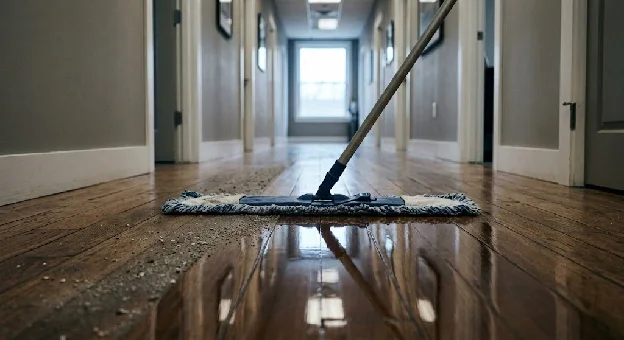
Daily maintenance is the same whether the floor is solid or engineered wood: remove dry soil before it can grind against the finish, clean with the right products, and handle spills right away.
- Dust mop or dry-sweep based on traffic level rather than a fixed schedule. A lobby or entry corridor with hundreds of entries a day needs far more frequent attention than a low-traffic boardroom.
- Damp mop only, never wet mop. Standing water and excess moisture can work into the seams and affect the wood and finish underneath.
- Use the flooring manufacturer's approved cleaner. A product formulated for a different floor type can leave residue or strip the finish's protective layer.
- Address spills immediately instead of waiting for the next scheduled cleaning. A spill that sits gets ground into the finish by the next round of foot traffic.
What Not to Use on a Commercial Wood Floor
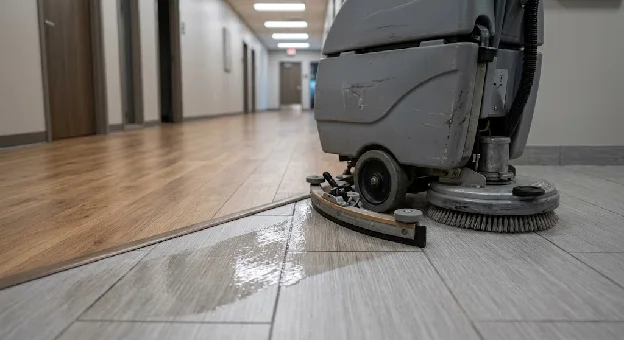
Most damage to a commercial wood floor is caused by a cleaning method borrowed from tile, resilient flooring, or concrete. Each of the methods below causes a specific, predictable kind of damage according to National Wood Flooring Association (NWFA) maintenance guidance.
| Method or Product | Why It's a Problem |
|---|---|
| Steam mops | Force moisture into the seams and surface openings of the wood, raising the risk of swelling, cupping, and finish damage. |
| Wet mopping (standing water instead of a damp cloth) | Creates the same moisture problem as steam, just delivered more slowly over repeated cleanings. |
| Oil soaps, waxes, and silicone-containing polishes | Leave a residue on the finish that can interfere with a future recoat's ability to bond, turning what should be a routine recoat into a full refinish. |
| Vinegar and harsh general-purpose chemicals | Break down the finish's protective layer with repeated use. |
| Autoscrubbers not suited to wood | Built for hard, non-wood floors, they apply water and agitation that a wood floor's seams aren't designed to handle. |
The residue issue is the one with the longest tail. A cleaning choice made this year can decide whether a floor stays in the maintenance category or moves into a full refinish years down the road.
Minnesota Winters Start at the Door
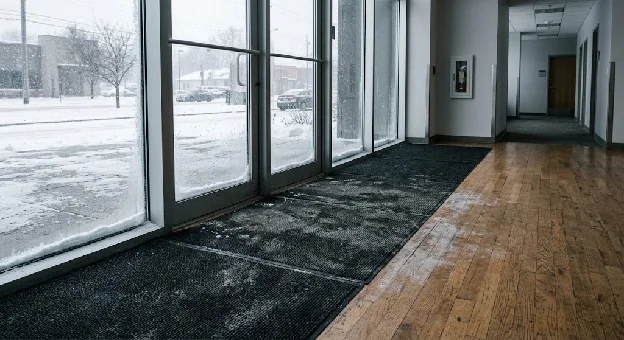
For Twin Cities buildings, winter maintenance starts at the entrance. Chloride-based ice melt tracked in from Minneapolis and St. Paul sidewalks leaves a white haze on wood finishes and is corrosive to the finish layer. Grit is often the bigger risk: it acts like sandpaper underfoot. High foot traffic grinds that grit into the floor, turning a cheap touch-up into a full, costly refinish.
Extending walk-off matting to roughly 10 to 15 feet from the entry captures most moisture and grit before it reaches the interior floor. Since Twin Cities winters run from November through March, buildings usually need additional matting during these months, along with more frequent debris removal and prompt cleanup of deicer residue. Many buildings follow one cleaning program year-round. A Twin Cities wood floor needs its entryway care to adjust to the season even when the rest of the program stays the same.
Make Humidity Part of the Maintenance Plan
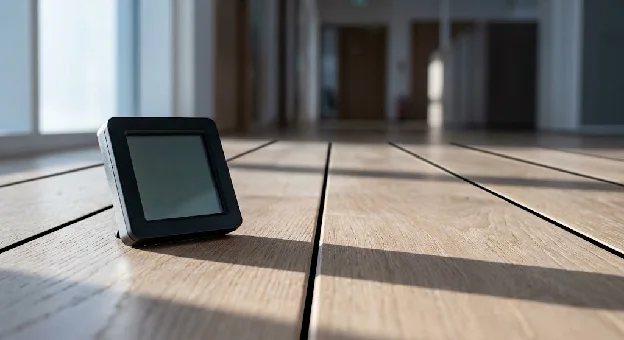
Cleaning is only half of a commercial wood floor's maintenance plan. The other half is what's happening in the air. Wood expands and contracts with the moisture around it, and Minnesota's seasonal swings put that movement to the test twice a year.
- During the heating season, indoor relative humidity can drop well below the 30% to 50% range wood flooring needs, contributing to board shrinkage and visible gapping between boards.
- In summer, buildings without adequate dehumidification can climb well above that range, contributing to expansion and cupping.
Monitoring indoor humidity is worth treating as a facility metric alongside cleaning rather than an afterthought.
Knowing When to Recoat
The right time to recoat a commercial wood floor is when the finish is visibly worn but the wood underneath hasn't been damaged yet. Waiting past that point, once wear reaches into the wood itself, can turn a maintenance recoat into a full refinish. Traffic patterns, rolling loads from carts, cleaning exposure, and humidity swings all factor into how quickly a floor reaches that point, which is why appearance alone doesn't tell the whole story. ATR's commercial wood flooring installations follow NWFA technical guidance. That same standard applies to knowing when a floor needs attention. Underlying slab moisture also plays into long-term flooring performance, which is where moisture mitigation for commercial flooring comes in for buildings dealing with subfloor conditions.
Getting Your Cleaning Contractor on the Same Page
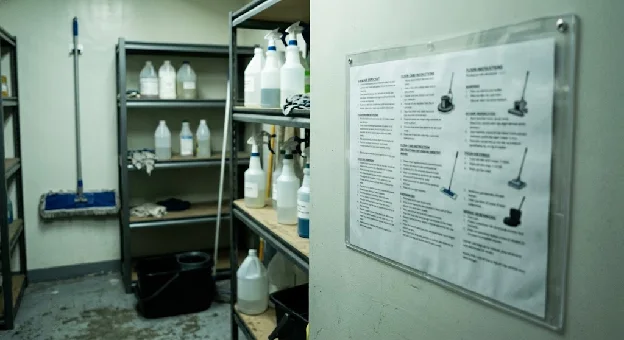
Most commercial buildings are maintained by a cleaning contractor running one program across every hard surface: tile, resilient flooring, concrete, and wood, often with the same products and equipment. That's the most common source of the mistakes above. Putting wood-care rules in writing—like damp-mopping only, skipping steam and autoscrubbers, and adding seasonal entry mats—gives contractors a clear standard instead of letting them treat wood like every other floor. This applies whether the floor is in a hotel lobby or dining room or an office reception area and boardroom.
Frequently Asked Questions
What's the best cleaner for commercial hardwood floors?
The best cleaner for commercial hardwood floors is the product the flooring manufacturer specifically approves for that finish, used with a damp mop rather than a wet one. General-purpose cleaners, oil soaps, and wax-based products can leave residue that dulls the finish and interferes with a future recoat.
Can you use a steam mop on commercial hardwood floors?
Steam mops should not be used on commercial hardwood floors. Steam forces moisture into the seams and surface openings of the wood, which raises the risk of swelling, cupping, and finish damage.
How often should a commercial wood floor be dust mopped?
How often a commercial wood floor should be dust mopped depends on traffic level rather than a fixed schedule. A high-traffic lobby or entry corridor needs daily attention, while a low-traffic boardroom can go longer between dust mopping.
Schedule a Commercial Floor Assessment
Above The Rest Floors & More has installed and maintained commercial flooring across the Twin Cities metro since 1998 and is 100% woman-owned. ATR doesn't sell cleaning products or maintenance contracts, so this guidance isn't steering you toward a purchase. It's meant to help you protect the floor you already have. A free site walk is available to assess your floor's condition and whether it needs a recoat, and ATR's installations carry a 2-year written workmanship warranty. Call (651) 463-1250 to schedule a review for your Minneapolis, St. Paul, Fridley, Roseville, or Anoka property.

About the author
Nick Winscher
Sales Manager / Senior Project Manager
Nick brings more than 20 years of commercial construction and flooring experience to project planning, underlayments, floor leveling, and delivery.