Commercial Moisture Mitigation Cost in Minneapolis & St. Paul: What Affects Your Flooring Project Budget?
Published April 19, 2026
Commercial moisture mitigation budgets depend on the slab's condition, the surface preparation it needs, the barrier system specified, and how that system needs to perform with the flooring installed above it. Before comparing numbers for a project in Minneapolis, St. Paul, or elsewhere in the Twin Cities metro, it helps to understand what actually makes up a complete scope. Above The Rest Floors & More offers commercial moisture testing (ASTM F2170/F1869) and moisture vapor barrier installation as part of its concrete repair, leveling, and flooring services for the Minneapolis area, including office buildings, tenant improvements, and hospitality projects, with headquarters in Fridley, MN.
Because slab conditions and preparation needs vary from building to building, a reliable budget comes from testing and a scoped estimate for the specific space, not a generic price per square foot.
Why Moisture Testing Comes Before Any Budget Number
Two ASTM test methods are commonly used across the flooring industry: ASTM F2170, which measures internal relative humidity within the slab, and ASTM F1869, which measures the moisture vapor emission rate using a calcium chloride test. You can review the full standard directly from ASTM International. There is not a single universal pass or fail number for either test. Whether a result is acceptable depends on what the specified flooring manufacturer requires for that particular product, so the test result and the chosen flooring system need to be evaluated together, not separately.
Above The Rest Floors & More offers commercial moisture testing under ASTM F2170/F1869 along with moisture vapor barrier installation, as part of its commercial moisture mitigation services for Minneapolis, St. Paul, and the surrounding Twin Cities metro.
What a Complete Mitigation Scope Can Include
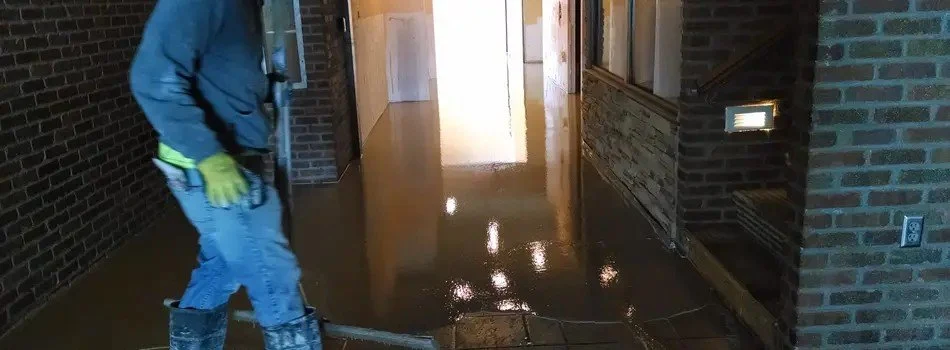
A moisture mitigation budget is rarely just the cost of a barrier product. A full scope typically involves several distinct pieces of work, each of which can affect the total project cost:
- Diagnostic moisture testing to establish the slab's current condition
- Surface preparation and removal of old adhesive, mastic, or other bond breakers before any barrier is applied
- Repairs to the slab surface where needed
- Application of the barrier or vapor-control material
- Leveling or underlayment work when elevation correction is also needed
- Installation of the finished flooring, such as commercial carpet or another specified surface
Industry preparation standards illustrate why this matters. For example, one widely used moisture mitigation product requires a sound, clean substrate prepared to a specific surface profile, free of adhesive residue, curing compounds, sealers, and other bond breakers, with repairs made as needed before the barrier goes down. Material coverage for that same product also varies with the mil thickness applied and with the surface's profile, porosity, and texture, which is part of why square footage alone cannot set the material quantity or cost. Leveling depth matters too: a thin underlayment application and a thicker one often call for different treatment within the moisture-control assembly. Above The Rest Floors & More structures its projects around this kind of complete scope, from material sourcing and surface preparation through gypsum underlayment and installation.
Comparing Bids: Why the Same Square Footage Can Cost Differently
Two bids for the same building can land at very different numbers because they are not actually quoting the same scope. A useful bid separates the work into clear line items rather than one lump sum, so it is easier to see what is and is not included. A lower material allowance on paper does not necessarily mean an equivalent installed system. If the coverage rate, prep scope, or assembly differs between two bids, the totals will not be comparable even if the square footage is the same.
- Testing: Which ASTM method was used and how the result compares to the specified flooring manufacturer's requirements
- Surface preparation: Whether adhesive residue, curing compounds, sealers, or other bond breakers need to be removed before any barrier is applied
- Barrier or vapor-control material: The specified coverage rate and thickness, since actual coverage varies with surface profile, porosity, and texture
- Underlayment or leveling: Whether the leveling depth changes the moisture-control assembly that is needed
- Finished flooring: Whether the flooring manufacturer's own moisture requirements have already been factored into the system selected
Site Conditions That Can Affect Scheduling
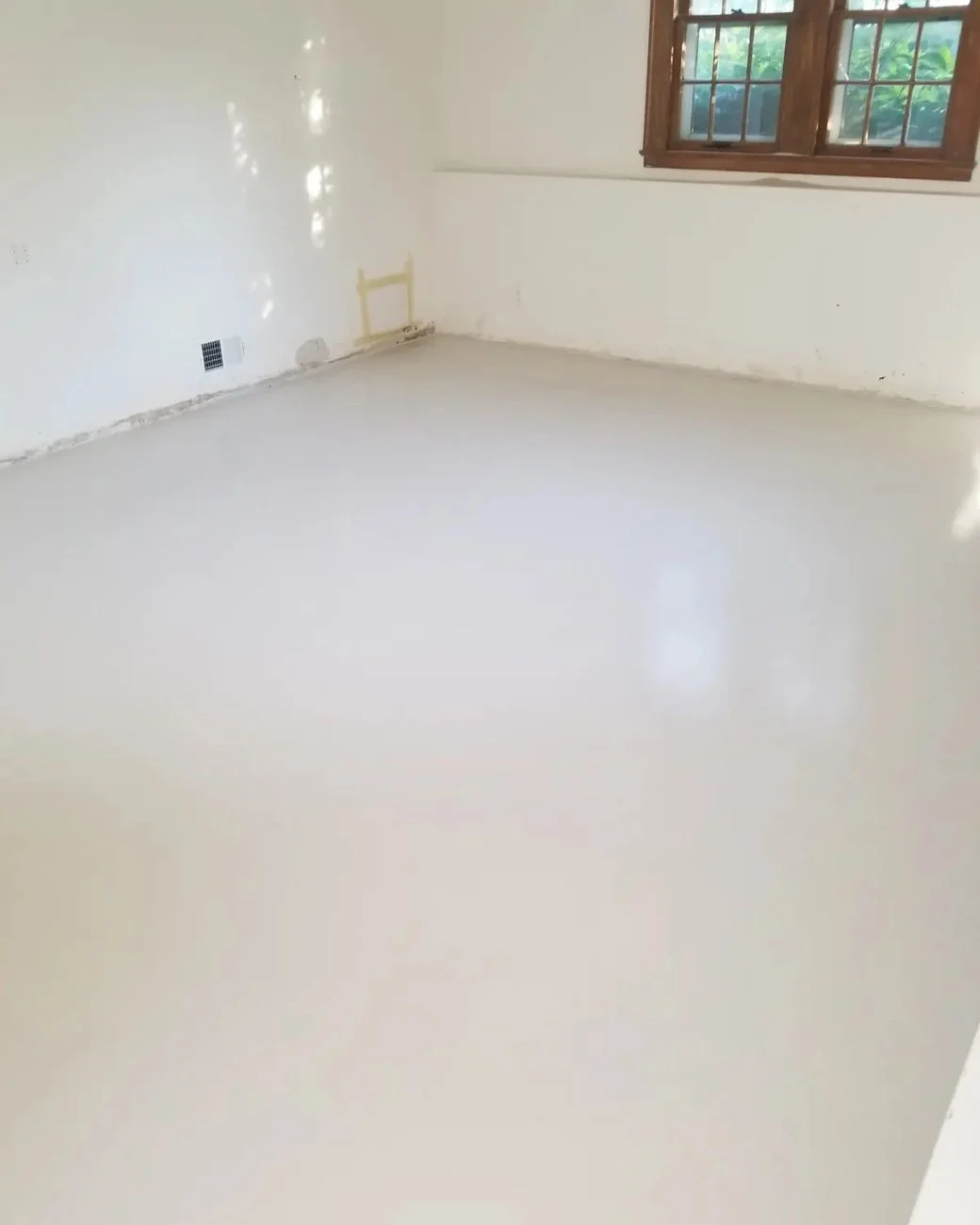
Moisture mitigation products used across the industry generally come with specific installation requirements that affect scheduling as much as cost. According to manufacturer technical data for one commonly used product, installation and cure typically call for minimum ambient and substrate temperatures, a dry surface, and controlled condensation. Many systems also build in intermediate milestones, such as a minimum waiting period before priming or installing underlayment over the barrier, rather than a single fixed project timeline. Active water sources, such as a drainage issue or a leak, generally need to be controlled before a moisture-vapor treatment goes in, since the treatment addresses vapor movement through the slab rather than an ongoing water problem. Confirming these conditions early helps set realistic expectations for when a project can start and how it will proceed.
Get a Scoped Evaluation for Your Minneapolis or St. Paul Project
If you are planning a commercial flooring project in Minneapolis, St. Paul, or elsewhere in the Twin Cities metro and want to understand what a complete moisture mitigation scope looks like for your space, Above The Rest Floors & More offers commercial moisture testing (ASTM F2170/F1869) and moisture vapor barrier installation as part of a complete flooring solution, from surface preparation through installation. Call (651) 463-1250 to talk through your project, or learn more about commercial moisture mitigation services for Minneapolis and St. Paul.

About the author
Nick Winscher
Sales Manager / Senior Project Manager
Nick brings more than 20 years of commercial construction and flooring experience to project planning, underlayments, floor leveling, and delivery.