
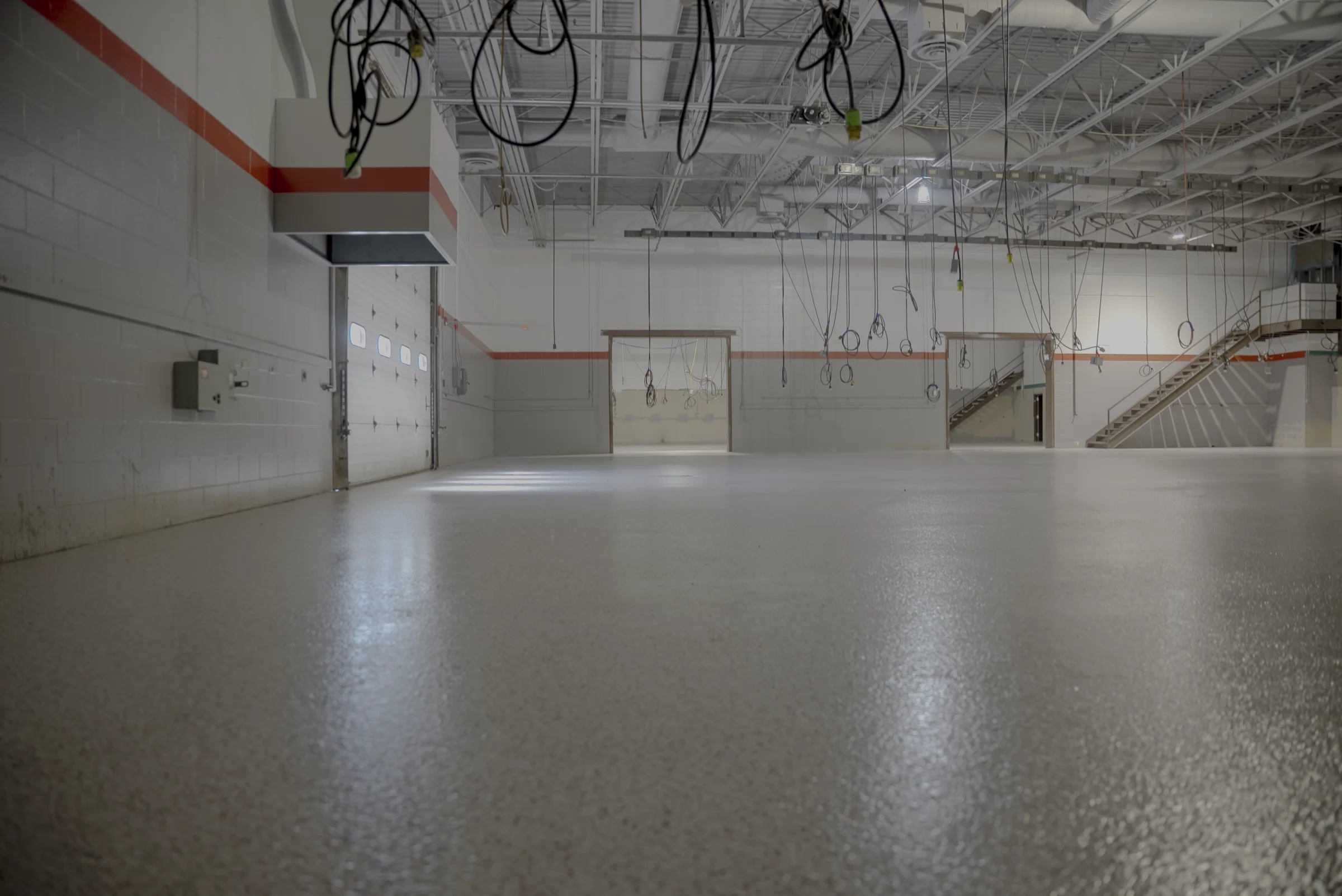
A floor that had already been patched too many times
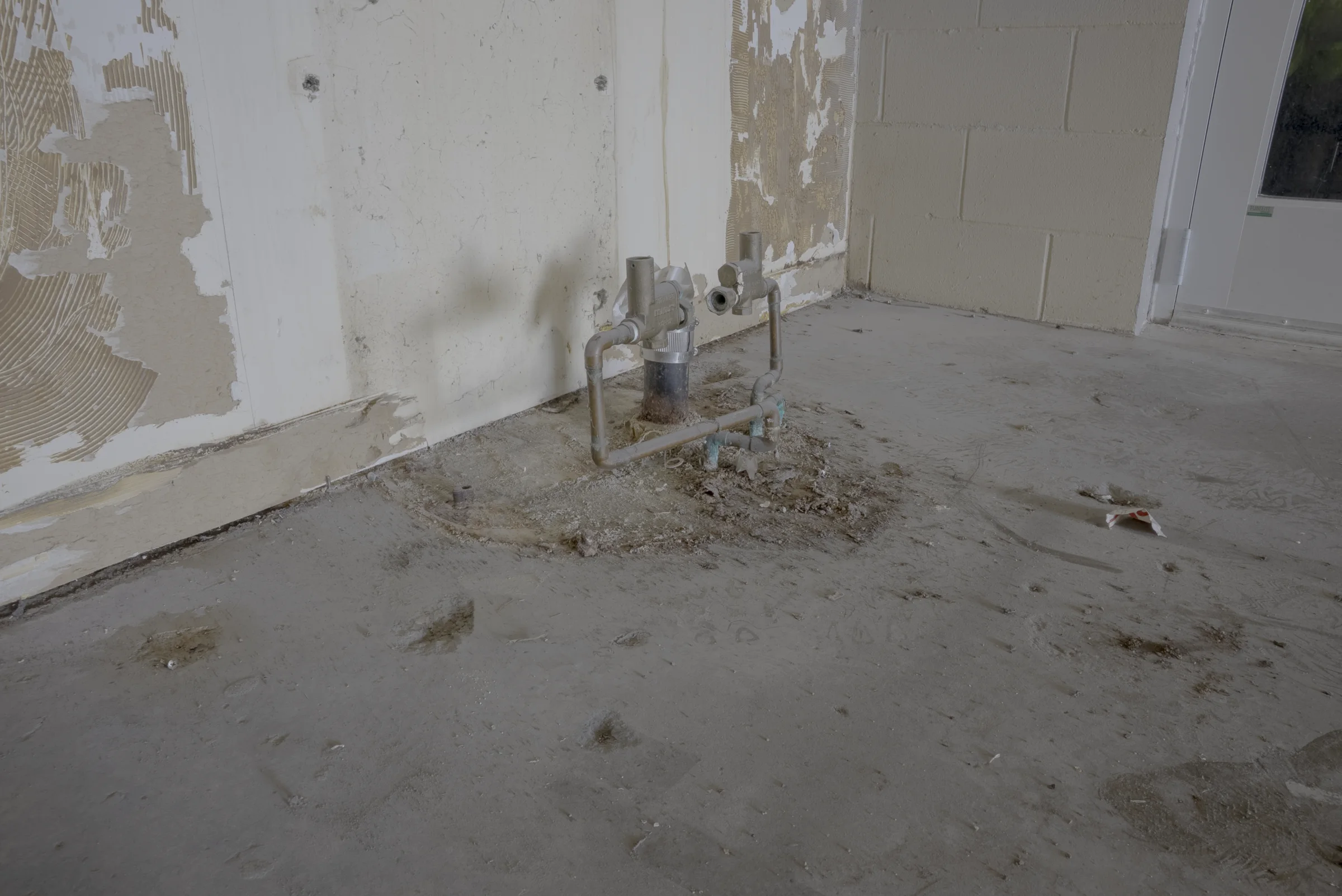
Before any coating could be applied, the slab had to be restored to a condition worth leveling. Years of old patches and elevation changes had left the surface uneven enough that coating alone would have just sat on top of the same problems.
Our crew removed the old patches with air hammers, treated the floor with WashAway Xtreme, cleaned it up, then treated it again with VersaGuard. When the VersaGuard was dry, we applied FM APS primer to get the slab ready for CombiMix CM 920.
Building a wall for wet concrete
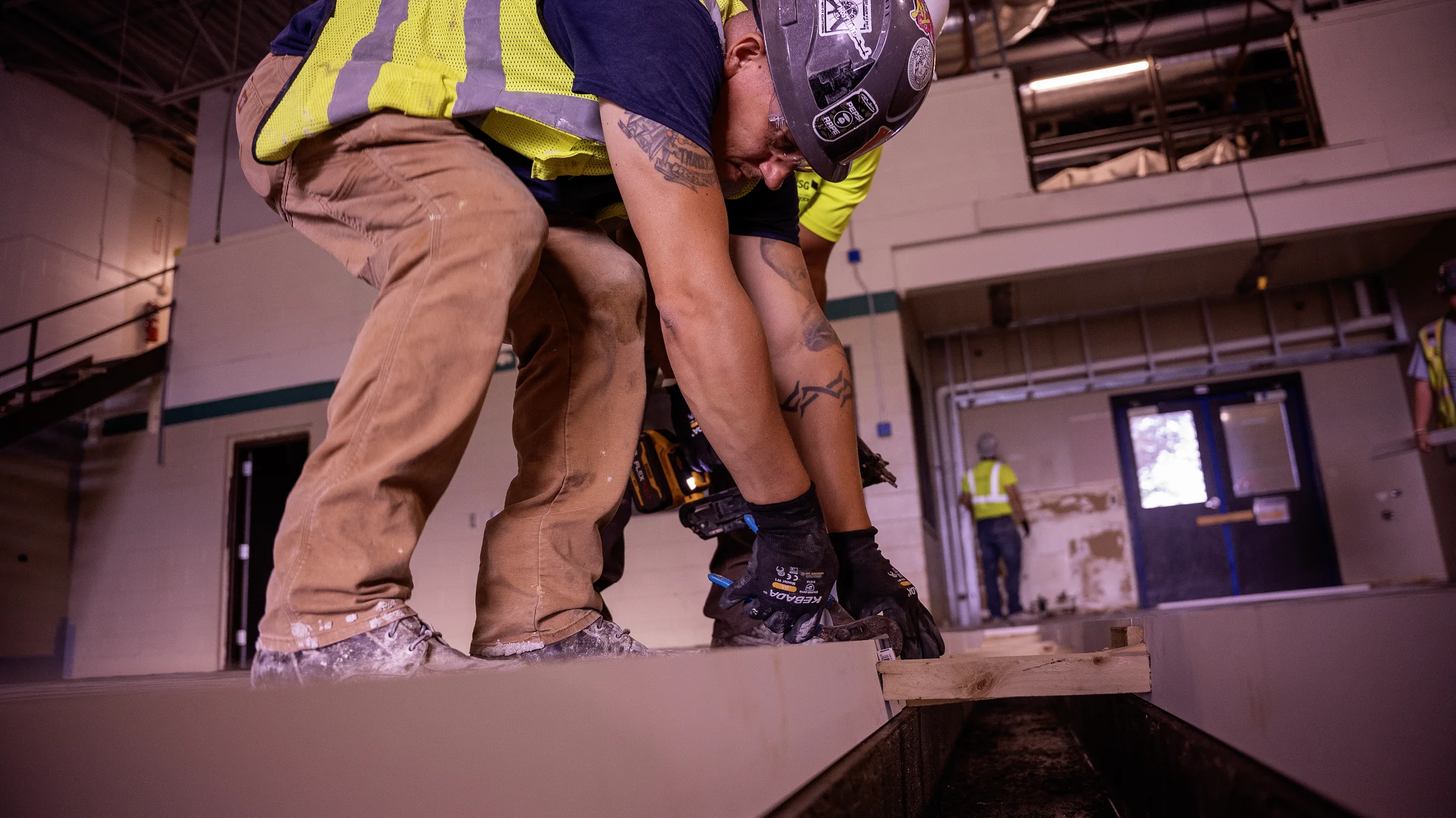
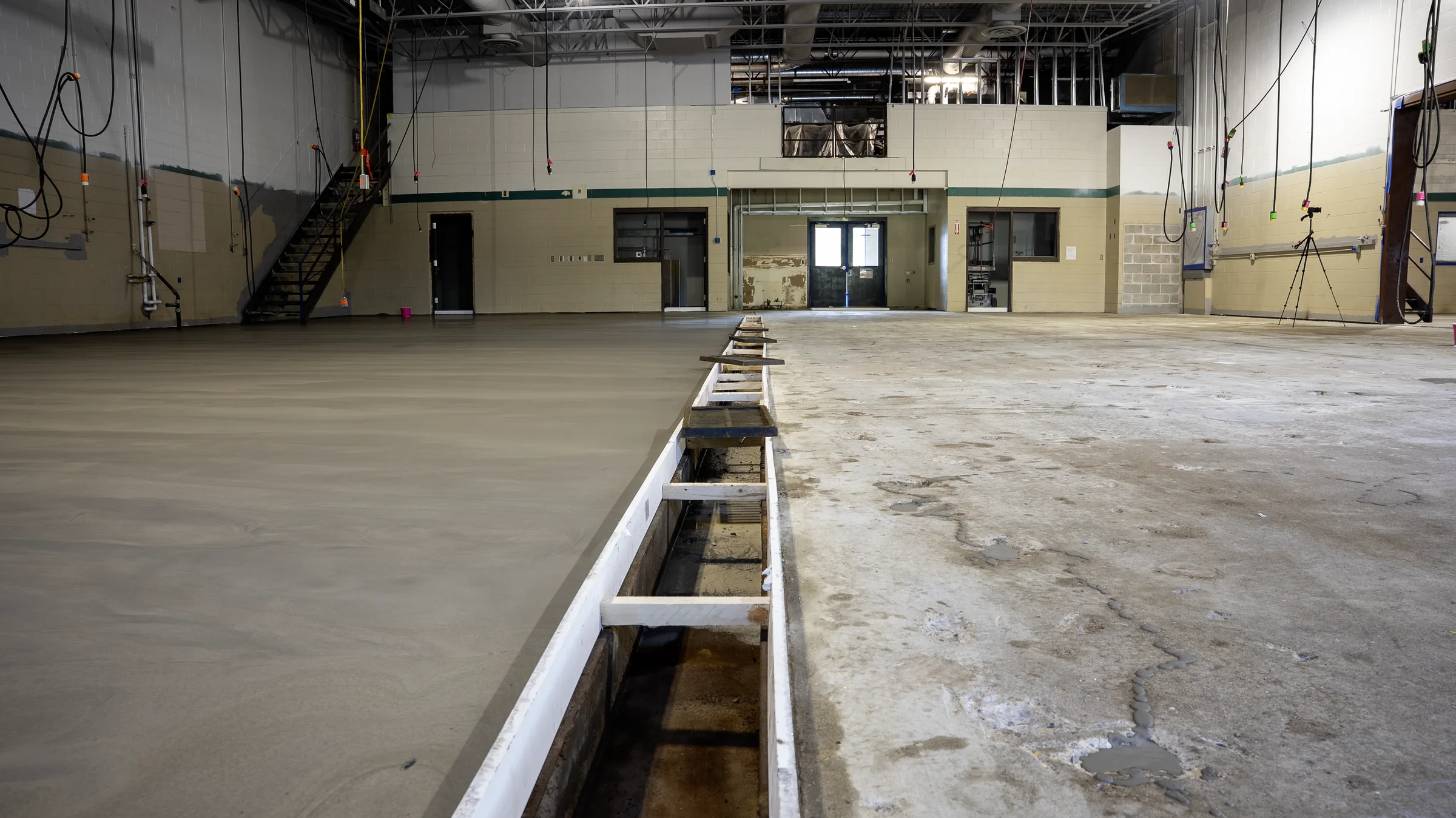
Self-leveling underlayment pours where you point it, which is exactly the problem with a floor drain. Before we could pump a drop of CM 920, we framed wood pour stops around both drains, tight enough to hold the pour back and shaped to keep each drain's slope intact.
That framing had to happen before the main pour. Get the form wrong and you're either flooding a drain or leaving a low spot that never drains right again.
The pour, and the part that wasn't in the manual
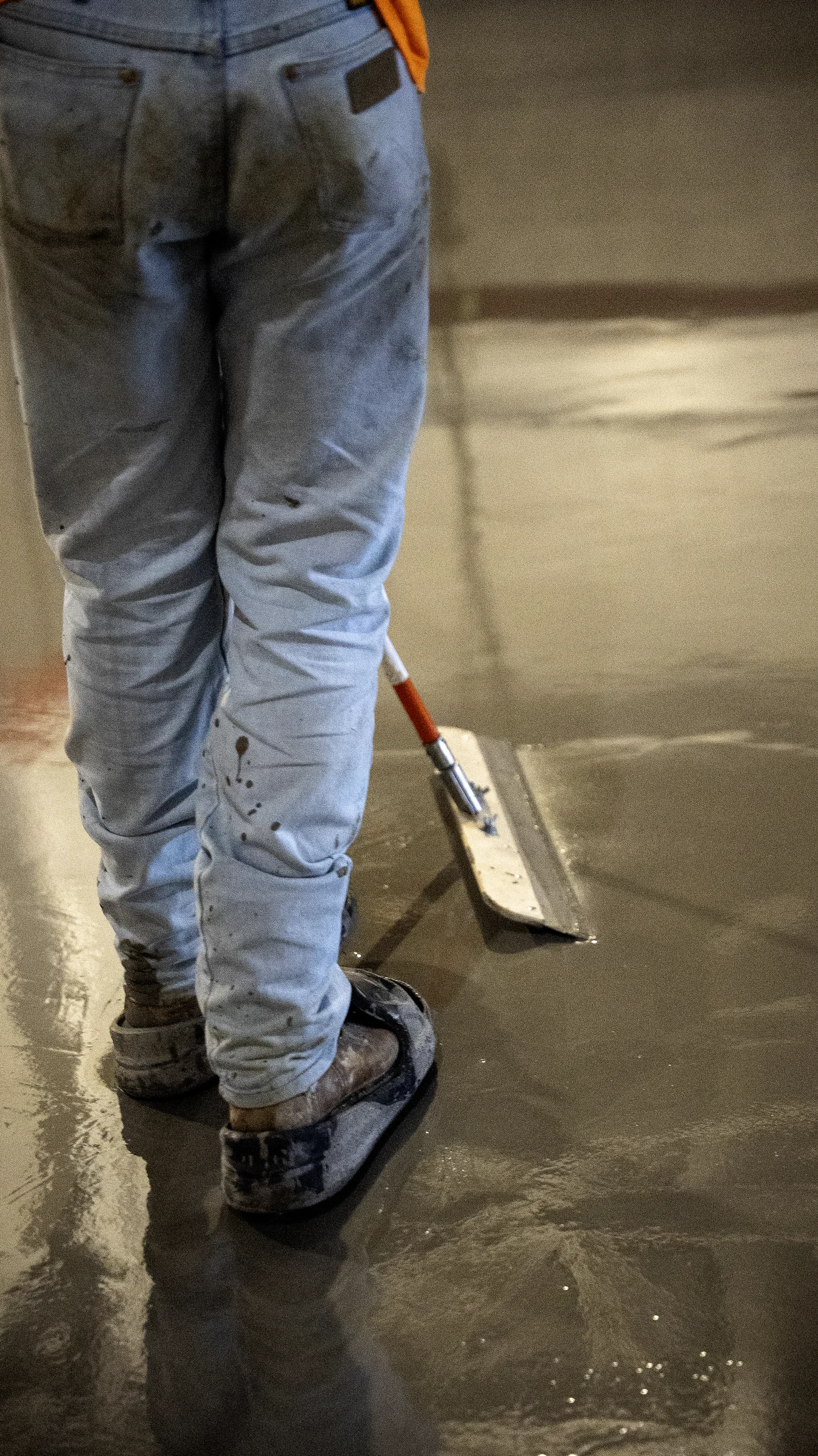
Staging and prep ran Monday and Tuesday with a three-person crew. The main pour happened Wednesday with six crew members on site, pumping CombiMix CM 920 across the full 9,850 square feet in a single coordinated push. The drains required the crew to use the CM 920 itself to shape the sloped detail work around each one by hand while the material was still workable. Thursday was cleanup, touch-ups, and demobilizing.
Handing off to the coating crew
The underlayment needed time to dry before anything else could happen to it. About a week later, once the floor was ready, Josh Theis and his team at Polished Concrete Plus came in for the grinding and coating phase. They worked over four days to grind the cured CM 920 and install the polyaspartic flake system, giving the floor its finished look and wear layer.
We coordinated the schedule and handled everything from the old patches through the leveled CM 920 base. Polished Concrete Plus handled the grind and the flake coat that sits on top of it.
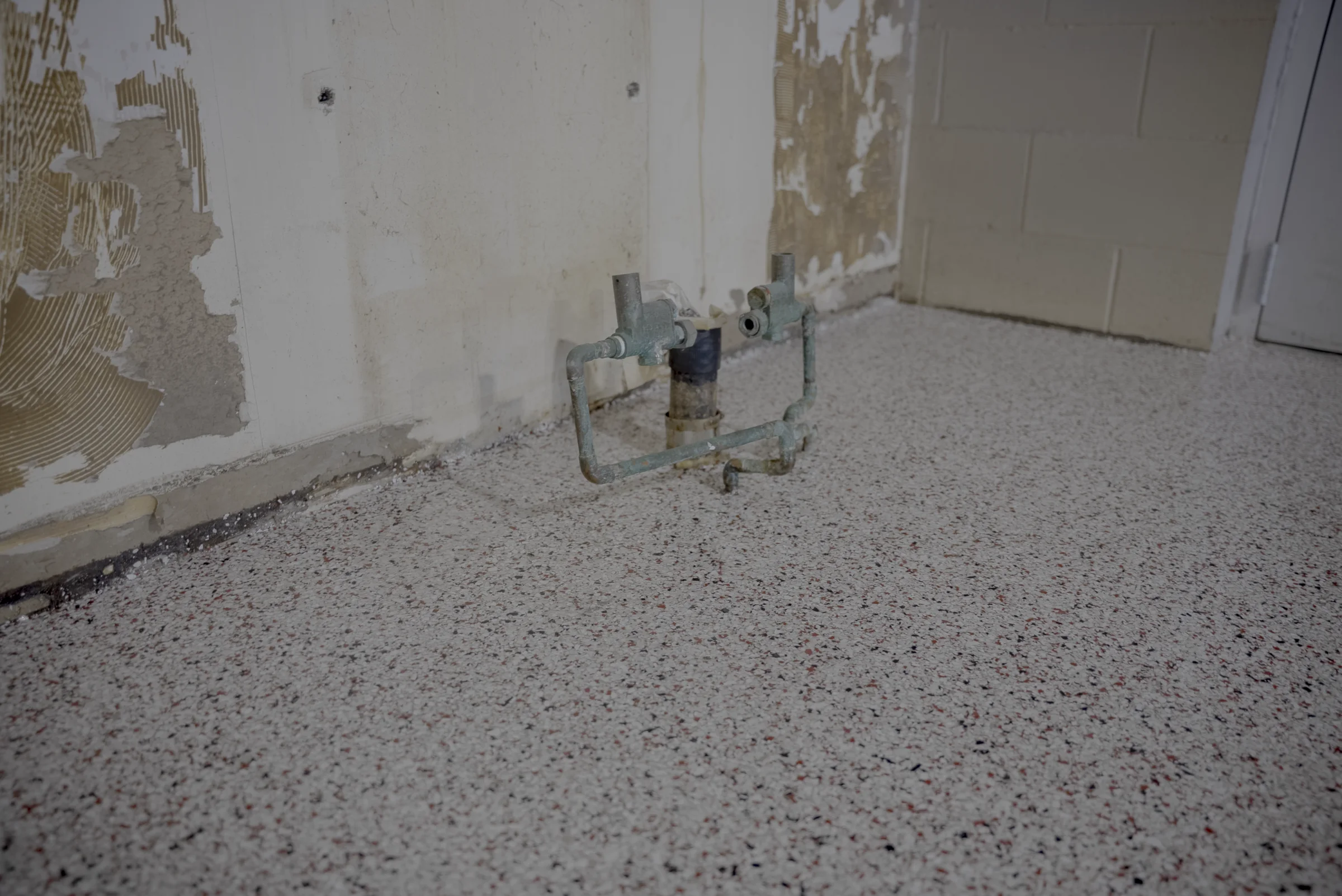
The custom-framed drains now sit completely flush in a smooth, seamless floor. You can't even feel them when you walk across the room, and that's the point. The hardest work is usually the part nobody notices once it's done.